Most professionals spend considerable time preparing for interviews.
They update their resumes. Practice responses to common questions. Research salaries. Study job descriptions. Prepare for negotiations.
Yet surprisingly few spend the same amount of time evaluating the organization itself.
This raises an important question:
Why do we work so hard to get the job but spend so little time determining whether the organization deserves us?
The consequences of this oversight are significant.
Every year, talented professionals accept positions that appear attractive on the surface. The compensation is competitive. The title sounds impressive. The company brand is recognizable. The recruiter is persuasive.
Everything looks right.
Until it doesn’t.
Months later, they discover leadership instability. A culture that tolerates dysfunction. Limited growth opportunities. Constant turnover. Unclear expectations. Burnout disguised as commitment.
By then, the decision has already been made.
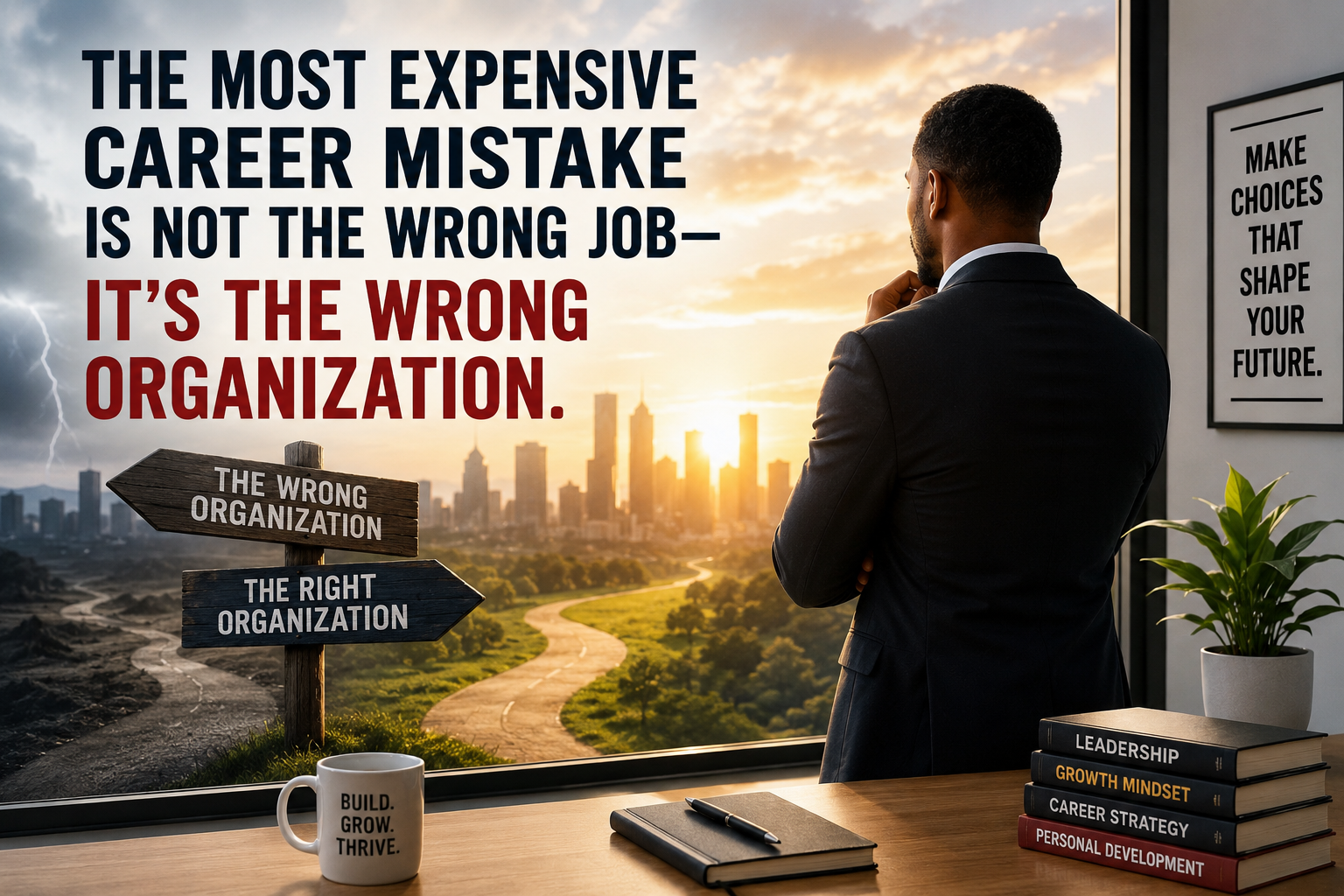
The truth is that many career setbacks begin long before an employee’s first day. They begin during the evaluation process when excitement replaces scrutiny and assumptions replace evidence.
A job is more than a paycheck.
It is an environment.
And environments shape people.
The organization you choose will influence your confidence, stress levels, professional development, relationships, opportunities, and long-term career trajectory. In many cases, it will influence your quality of life more than the actual responsibilities listed in the job description.
This is why I believe one of the most important career skills is not interviewing.
It is evaluation.
The ability to evaluate leadership quality, organizational stability, workplace culture, employee experience, and long-term growth opportunities may be the difference between thriving and merely surviving.
Before accepting your next opportunity, ask yourself:
- What evidence exists that employees are growing here?
- How stable is the leadership team?
- What is the organization’s reputation among current and former employees?
- Are people leaving, and if so, why?
- Does the culture support performance, development, and well-being?
- Would I still want this job if the title were removed?
These questions often reveal more about a company’s future than the recruiting brochure ever will.
The best career decisions are rarely emotional decisions.
They are informed decisions.
A dream job is not defined by a salary, title, prestige, or perks.
It is defined by the quality of the organization behind the offer.
Let’s Discuss
Have you ever accepted a job that looked great initially but turned out very different from what was promised?
Or have you worked for an organization that truly helped you grow and thrive?
Share your experience in the comments. What is the single most important factor you evaluate before accepting a new opportunity?

One Response
Great content! Keep up the good work!